
PART 2 - WHAT HAPPENED UNDER HELEN BUNT?
As we covered in Part 1, Cornwall had already voted to accept the Star-Newco water system when Helen Bunt became supervisor in January 2000. The deal wasn't finished, but it was still very much active.
By May, Town Attorney James Loeb was calling it a “MAJOR POTABLE WATER SUPPLY” and a “true BENEFIT for the TOWN.” He told the Board that “many aspects are coming together on this water supply acquisition.”
Then, nothing.
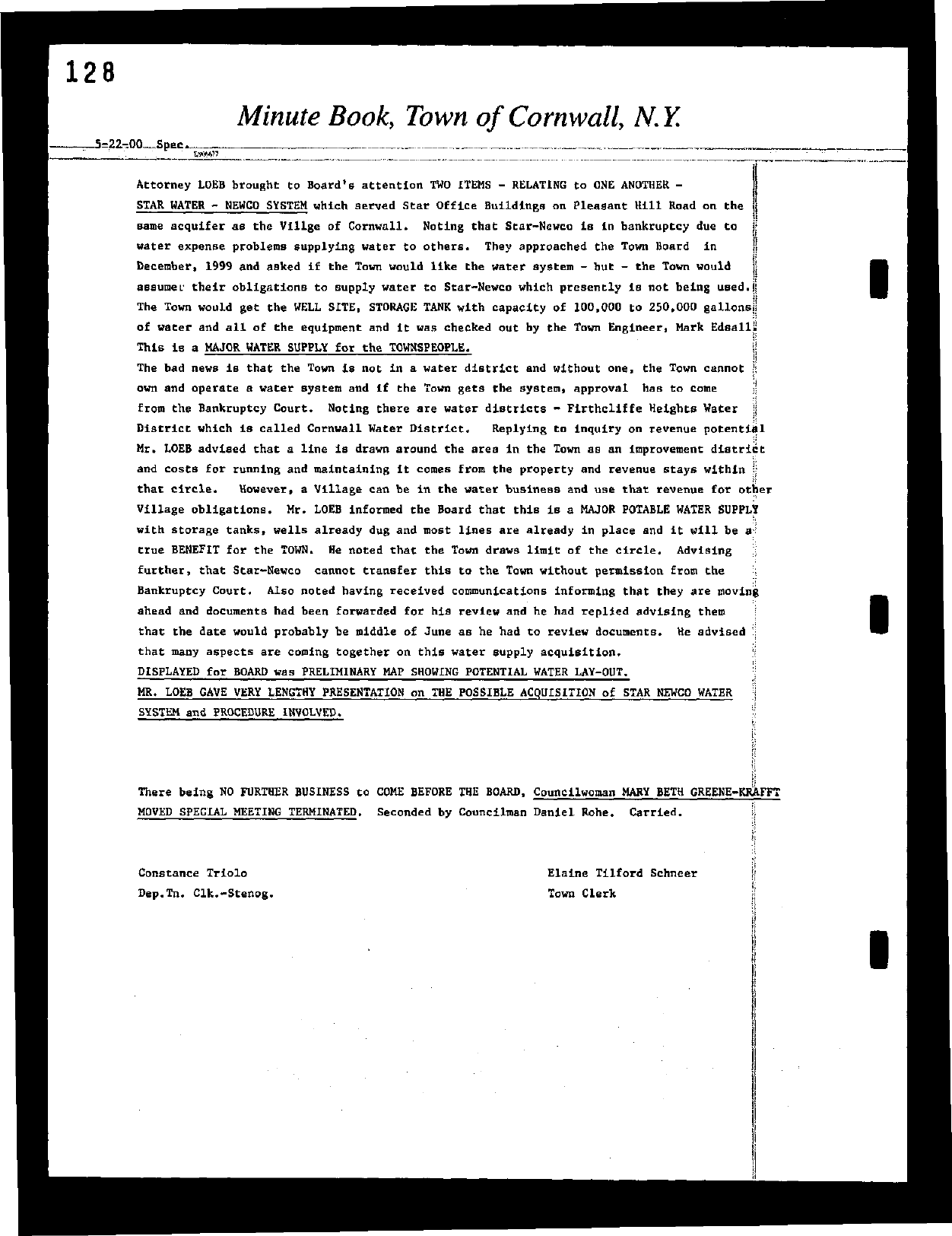
Town of Cornwall Town Board Minutes, May 22, 2000. Town Attorney James Loeb discusses the possible Star-Newco acquisition.
So what happened? There are a few possible explanations.
What about contamination?
This has now become part of the explanation for why Cornwall didn't need or shouldn't have wanted the wells.
Yes, the former Star industrial property was contaminated.
EPA records say VOCs, semi-volatile organic compounds, petroleum hydrocarbons and heavy metals were released at the former manufacturing site. EPA also says groundwater was impacted in both the overburden and bedrock aquifers.
But that is not the whole EPA record.
EPA also discusses testing of drinking-water wells around the site. It says:
“No contamination has been found to date that was in excess of New York State groundwater/drinking water standards or traceable to the Star site.”
But the EPA page does not say the four Star water-supply wells Cornwall voted to acquire were contaminated or unusable.
Read the EPA's full record on the former Star property
There is another problem with using contamination as the complete explanation for why the acquisition stopped.
Cornwall had already conducted an environmental review.
Bunt voted yes and then the Board voted to accept the system. Bunt voted yes again.
And five months later, the Town Attorney was still calling it a “MAJOR POTABLE WATER SUPPLY” and saying the acquisition was moving ahead.
But if contamination is what stopped Cornwall from acquiring the wells, when did that happen?
What changed after May 22, 2000? And where is that decision in the Town record?
What about the Bankruptcy Court?
This was another real hurdle. The Town could not simply take the water system. The transfer required Bankruptcy Court approval.
But Cornwall knew that before Bunt became supervisor.
The December 1999 resolution accepting the system says plainly that the acquisition was subject to approval by the United States Bankruptcy Court and a permissive referendum.
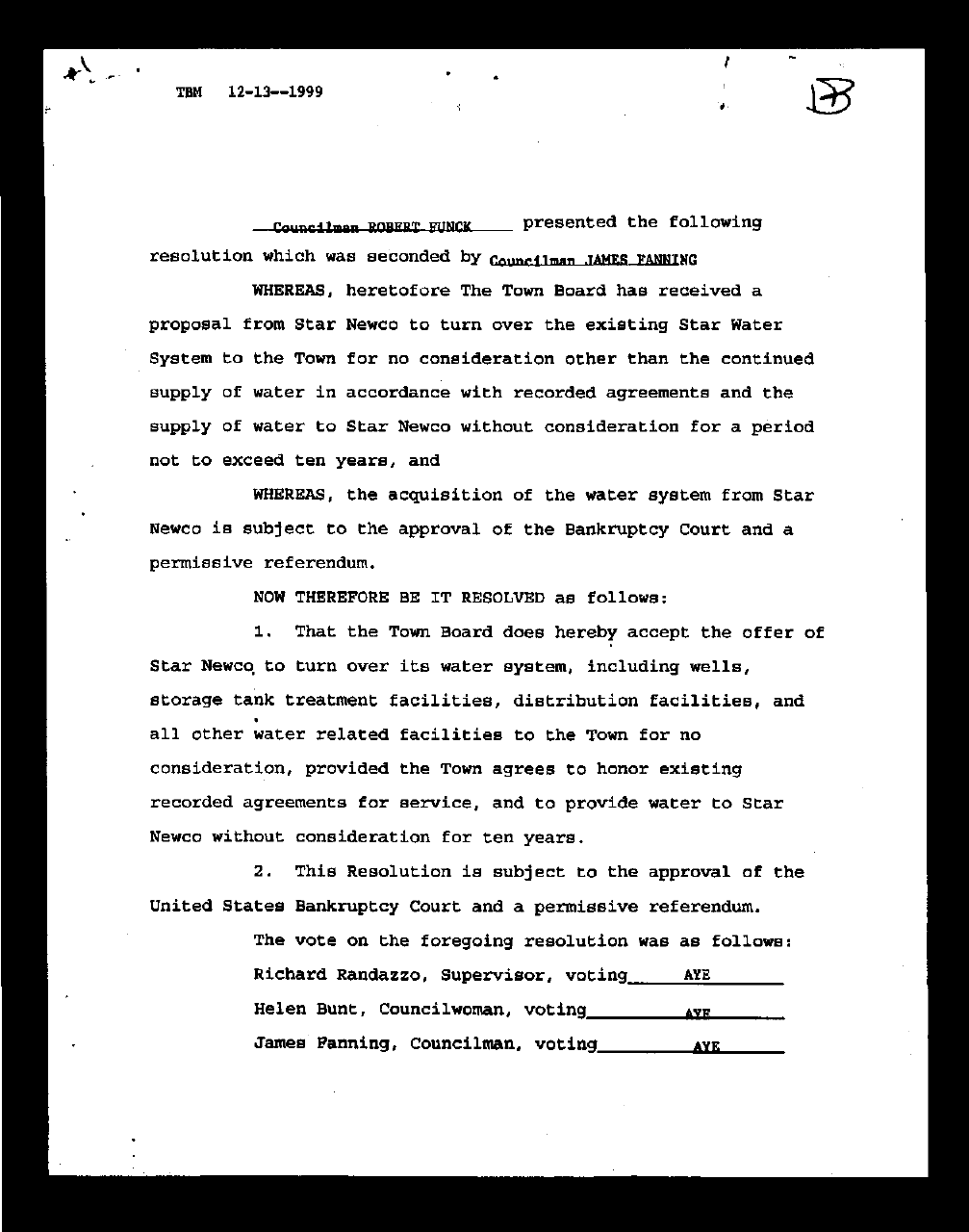
Town of Cornwall Town Board Minutes, December 13, 1999. Resolution accepting the Star Newco water system, subject to Bankruptcy Court approval and a permissive referendum.
Loeb brought up the Bankruptcy Court again in May 2000. And in the same presentation, he said the acquisition was moving ahead. So we know Bankruptcy Court approval was required.
What we don't know is what Cornwall did about it. Was approval requested? Was it denied?
Randazzo left it unfinished
Richard Randazzo started this process at the end of his term. He was supervisor when Star Newco made the offer. He was supervisor when the Town conducted its SEQRA review and voted to accept the system.
Then he left office.
But that still doesn't tell us what happened next. Bunt had voted for the acquisition. She became supervisor with it unfinished.
And then Cornwall never acquired it.
“SOMETHING HAPPENED”
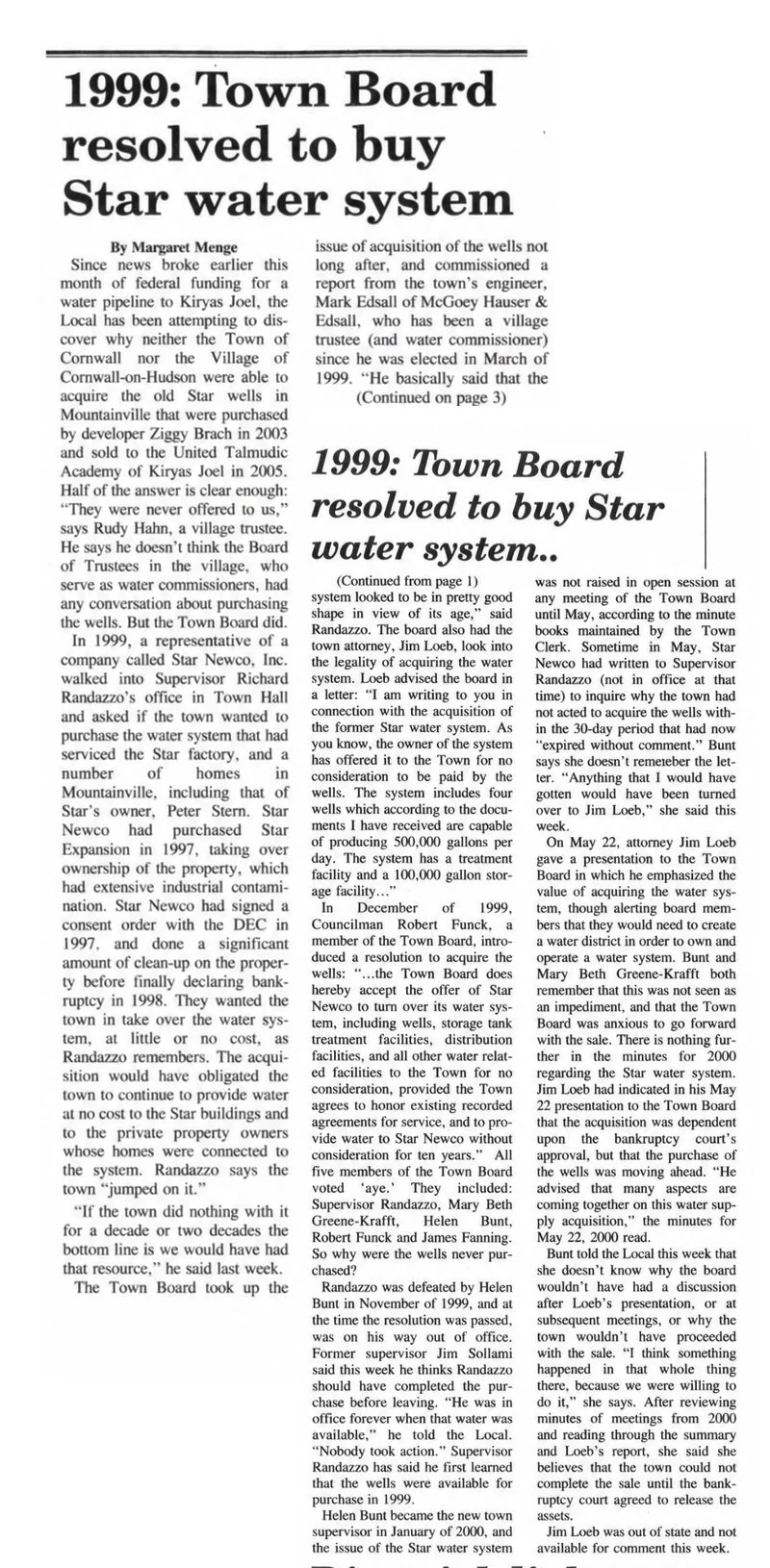
1999: Town Board resolved to buy Star water system” By Margaret Menge. The Cornwall Local. November 30, 2007
Years later in 2007, The Cornwall Local asked Bunt why the Board stopped discussing the acquisition and why Cornwall never proceeded. Her answer?
“I think something happened in that whole thing there, because we were willing to do it.”
For a major Town acquisition, “something happened” is not an explanation.
We know what happened. Cornwall never got the wells but someone else eventually did.
In Part 3, we follow where they went next.