
PART 1 - The Wells Cornwall Could Have Had
How does Cornwall unanimously vote to accept a potentially major water source and end up without it?
That is the story of the Star-Newco wells in Mountainville.
Many Cornwall residents may have never heard of these wells. For those who have, here’s a reminder of what the record shows.
In December 1999, Star Newco offered Cornwall an existing water system that included four wells, treatment facilities and a 100,000-gallon storage tank.
According to documents presented to the Town Board, the four wells were capable of producing approximately 500,000 gallons of water per day.
The system was offered with “no consideration to be paid by the Town.” In other words, Cornwall would not pay a purchase price. But we all know, nothing is ever free...
The deal wasn't finished. Because Star Newco was in bankruptcy, the transfer still needed approval from the Bankruptcy Court. Residents also had the right to force a public vote.
So there was still work to do. But Cornwall had said yes.
Before voting to accept the system, the Town Board conducted a review under the State Environmental Quality Review Act, or SEQRA.
The December 13, 1999 resolution says the Board had received and reviewed a Full Environmental Assessment Form prepared by the Town's planner. After reviewing the environmental assessment, the Board determined that a full environmental impact statement was not required.
The vote was unanimous.
Helen Bunt, then a councilwoman, voted yes.
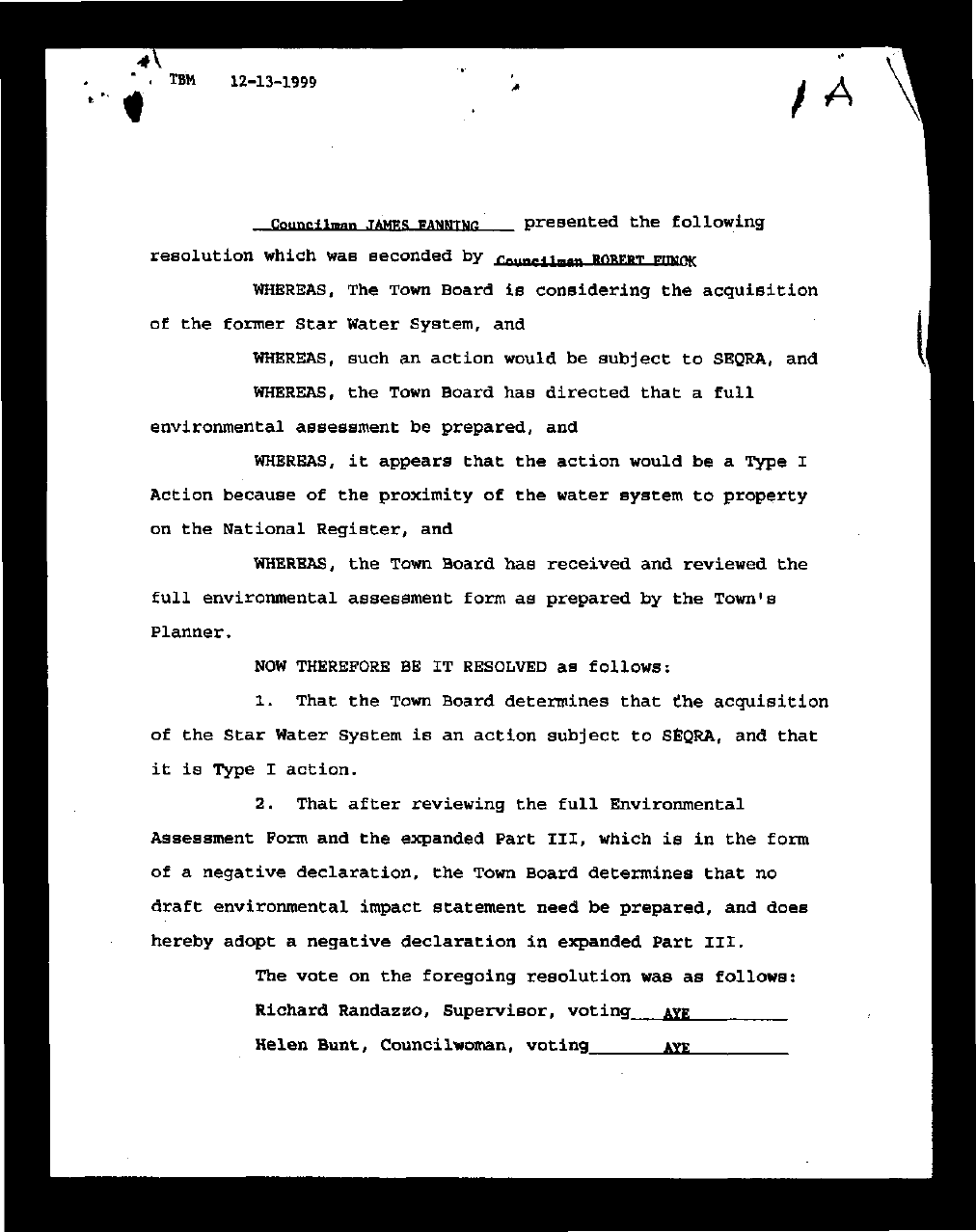
Town of Cornwall Town Board Minutes, December 13, 1999. SEQRA review of the proposed Star Water System acquisition.
The environmental review is important. The former Star industrial property did have documented contamination. But that doesn't necessarily mean the four water-supply wells Cornwall was considering were contaminated or unusable.
Immediately after the environmental determination, the Town Board voted to accept Star Newco's offer.
The resolution says:
“The Town Board does hereby accept the offer of Star Newco to turn over its water system, including wells, storage tank treatment facilities, distribution facilities, and all other water related facilities to the Town for no consideration.”
Again, the vote was unanimous.
Helen Bunt voted yes.
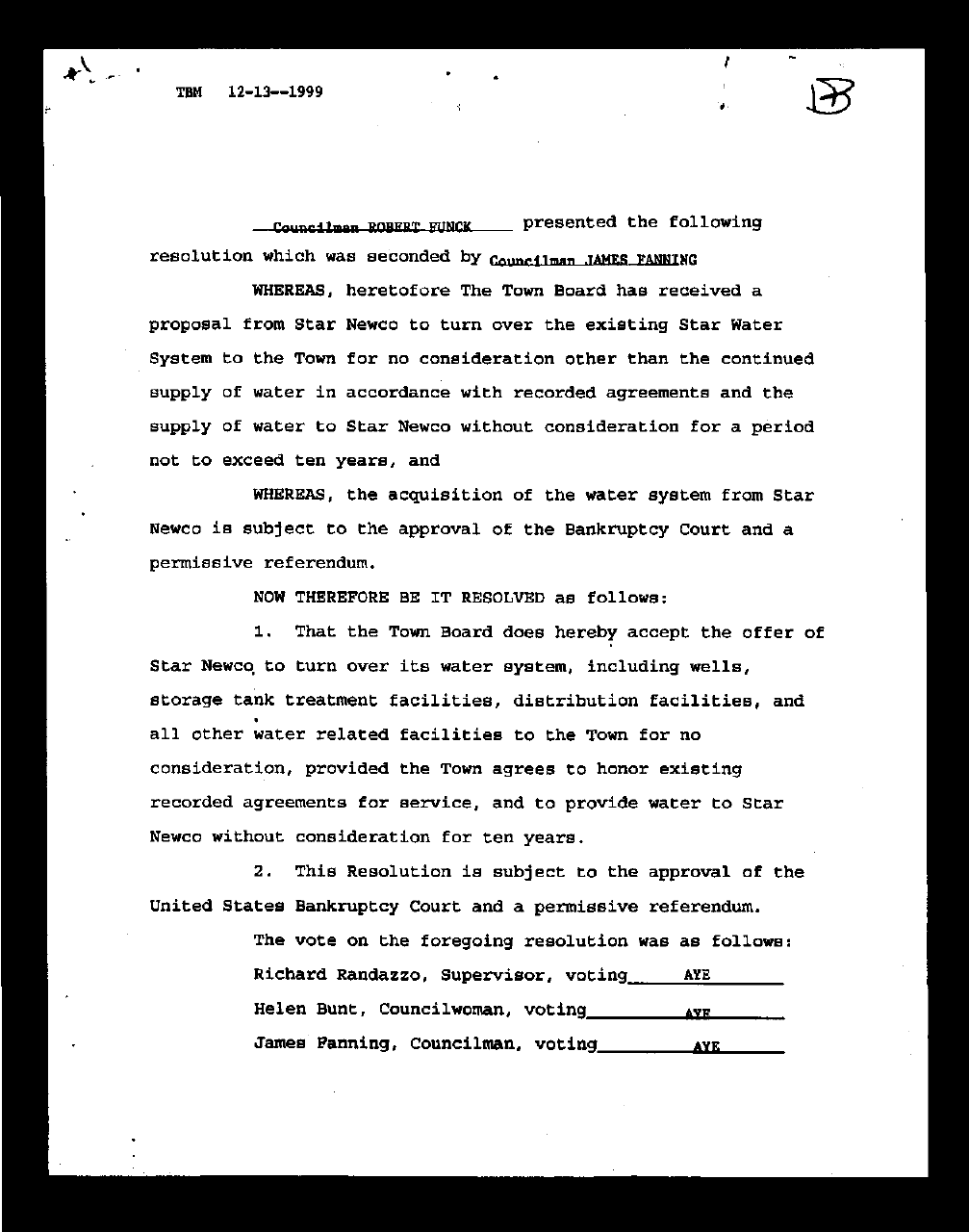
Town of Cornwall Town Board Minutes, December 13, 1999. Resolution accepting the Star Newco water system, subject to Bankruptcy Court approval and a permissive referendum.
Then the administration changed…
Richard Randazzo left office at the end of December. Helen Bunt became town supervisor in January 2000. The acquisition was left unfinished.
However, fast forward five months, the acquisition is still active.
At the May 22, 2000 Town Board meeting, Town Attorney James Loeb gave what the official minutes describe as a “VERY LENGTHY PRESENTATION” about the possible acquisition.
He said Cornwall would receive the well site, storage tank and equipment, which the minutes say had been checked by Town Engineer Mark Edsall.
Loeb also explained what still had to happen.
Cornwall needed a water district to own and operate the system and the transfer still required Bankruptcy Court approval. There were clearly still hurdles to closing the deal.
But nothing in Loeb's presentation suggested Cornwall had decided to walk away. He even called the system a “MAJOR POTABLE WATER SUPPLY” and a “true BENEFIT for the TOWN.”
Loeb said “many aspects are coming together on this water supply acquisition.” but then, nothing.
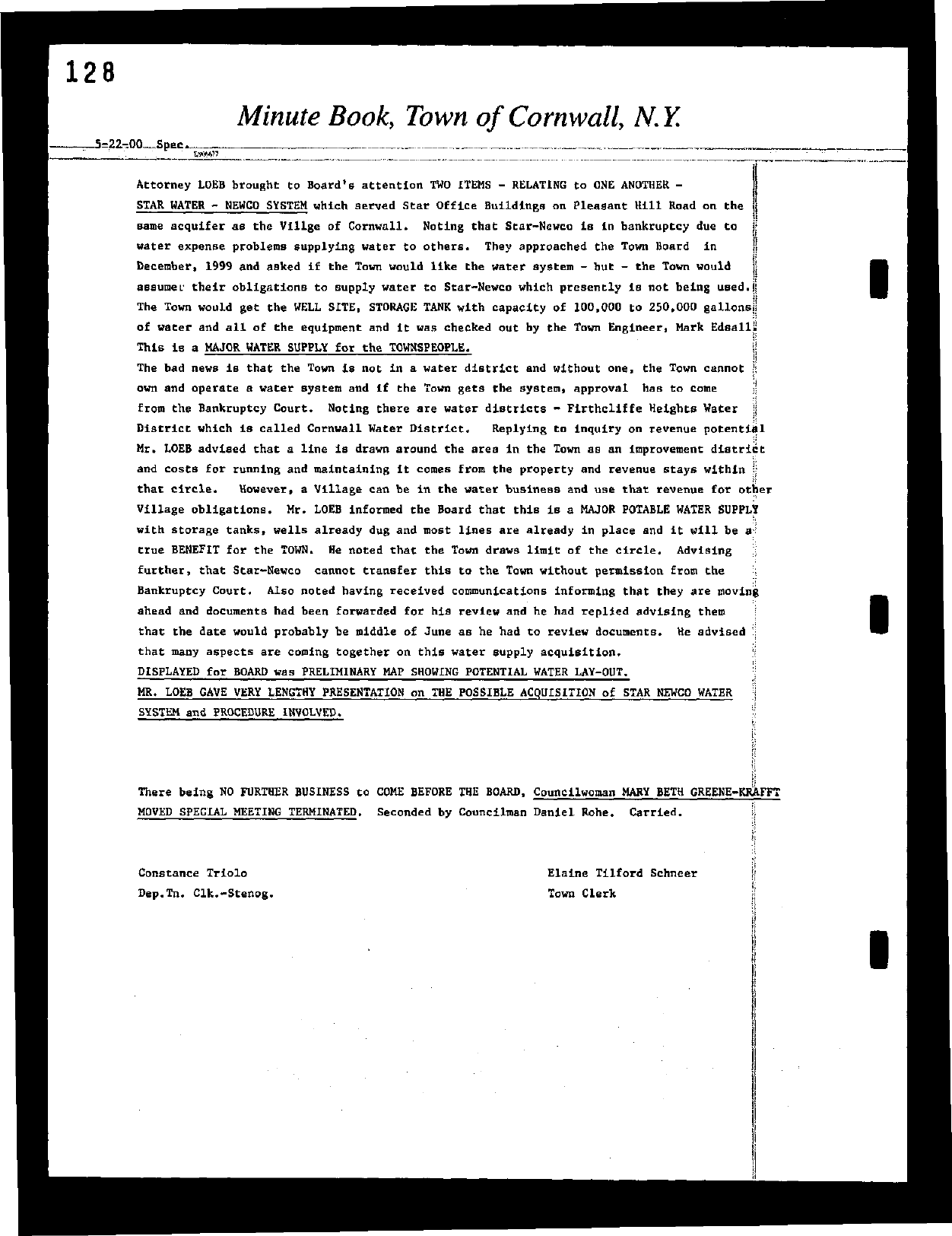
Town of Cornwall Town Board Minutes, May 22, 2000. Town Attorney James Loeb discusses the possible Star-Newco acquisition.
In the Town Board minutes reviewed for this series, the May 22 presentation is the last discussion we have located about Cornwall acquiring the Star-Newco system.
The short version is this: Cornwall was offered the water system, reviewed it and voted to accept it. Helen Bunt voted yes. Five months after she became supervisor, the Town Attorney was still calling it a “MAJOR POTABLE WATER SUPPLY” and saying “many aspects are coming together on this water supply acquisition.”
But Cornwall never got the wells.
Did the Bankruptcy Court stop it? Did new environmental information change things? Did the Town simply decide it was no longer worth pursuing?
In Part 2, we pick up in 2000 with Helen Bunt as supervisor.